On December 5, 2024, over 1,600 IndiGo flights were cancelled in a single day, stranding thousands of passengers across Indian airports. The immediate cause was the airline’s failure to adequately prepare for new pilot rest regulations, but the scale of disruption raised a more fundamental question: how did one airline become so dominant that its operational failure could paralyse an entire nation’s air travel? IndiGo now controls 65% of India’s domestic aviation market, operates as the sole carrier on over 60% of routes, and together with Air India commands more than 90% of the sector. On December 18, 2024, the Competition Commission of India announced it had initiated an investigation into IndiGo in the context of these disruptions, examining whether such market concentration violates competition law.
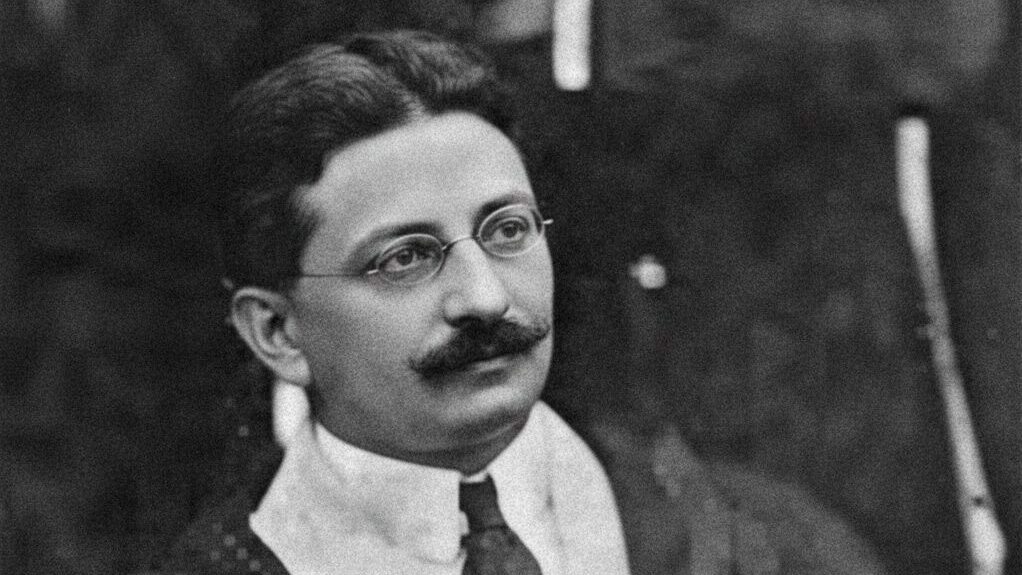
The crisis has renewed attention to a constitutional debate from 76 years ago—one in which Professor of Economics and socialist K. T. Shah, from Bihar, made a spirited intervention calling for the Constitution to ban monopolies.
When India’s Constituent Assembly debated Article 31 in November 1948, the Draft directed the State to secure “that the ownership and control of the material resources of the community are so distributed as best to subserve the common good” and “that the operation of the economic system does not result in the concentration of wealth and means of production to the common detriment.” The language was deliberately general. Dr. B.R. Ambedkar, Chairman of the Drafting Committee, explained the Assembly was incorporating principles that would allow India to pursue “economic democracy”—the idea that political rights meant little without economic security and opportunity.
Shah found this far too vague. In amendment No. 892, he proposed explicit language: “there shall be no private monopolies in any form of production of material wealth, social service, or public utilities nor shall there be any concentration of means of production and distribution in private hands and the State shall adopt every means to prevent such concentration or accumulation.”
How Monopolies Actually Form
Shah’s speech that day outlined a sophisticated understanding of how monopolies develop. He began by acknowledging that formal monopolies—those created by direct government grant or patent—were already widely distrusted. But he warned that most dangerous monopolies emerge through subtler means:
“Monopolies develop much more artificially; monopolies develop much more by force of the very circumstances that competition is supposed to provide. In a competitive society, we are told, the only guarantee of the common good being served is that, by the mere process of competition amongst themselves, the competing producers will have so to reduce prices, they would have so to bring down their costs or selling price, that the largest amount of profit can be gained if the monopolised commodity is consumed by the widest number of consumers. In actual fact, however, Sir, in every country that has got industrialized, and commercialised on a wide scale, you find that the competitors soon come to realise that competition is good for nobody.”
Shah pointed to historical examples from America, England, Germany, and France, where competitors formed Trusts, Syndicates, and Cartels—arrangements that appeared to reduce costs and improve efficiency but actually created “virtual monopolies” that added “enormously to the increasing profit of the private proprietor.”
The Case for Public Ownership of Natural Monopolies
Shah was particularly concerned about monopolies in essential services and industries. Anticipating arguments about efficiency, he insisted that natural monopolies—industries where single providers were most efficient—should therefore be publicly owned:
“By their very nature, these resources cannot be exploited economically or efficiently unless they become monopolies. In one form or another, they have to be developed in a monopolistic manner. Now monopolies are always distrusted so long as they remain in private hands and are operated for private profit. If they are to be monopolized, as I believe inevitably they will have to be, then it is just as well that they should be owned, managed and worked by the State.”
Shah drew on India’s own recent history, referencing the struggle of indigenous shipping companies against foreign monopolists who enjoyed government support. He warned that without explicit constitutional prohibition, similar patterns would re-emerge in independent India: “private Monopolies, by their very nature, are not in the interests of the public, unless they are of the community as a whole.”
Social Services: Education and Healthcare
Shah’s most striking passage addressed monopolies in social services:
“Whether it is in an ordinary industry like the manufacturing industry turning out a given product, or in any industry which is making consumer goods, or in a social service, like Education or Health, there is danger of monopolists creating strong private interest which it will never be in the interests of the country to tolerate. I should therefore forbid the very possibility of any monopoly emerging, let us say, in the matter of education or educational apparatus, let us say, in regard to health or the production of drugs, or making medicines, or the supply of surgical and other instruments and apparatuses.”
He concluded with a blunt assessment of political economy:
“The civilised cannibal of our time, the blood-sucker, is the exploiter who is highly honoured, who is often titled, who is very fully represented in this House also, and is therefore able to dictate to you, and inspire you in innumerable ways, as to how you shall provide for his safety in the Constitution itself, so that he could get a new lease of life and go on in a variety of ways, multiplying, diversifying, increasing and intensifying his monopoly to the prejudice of the common people.”
Ambedkar’s Response: The Case for Flexibility
Dr. Ambedkar spoke briefly in response. He opposed Shah’s amendment, arguing that the Draft’s existing language was superior precisely because of its generality:
“With regard to his other amendments, viz., substitution of his own clauses for sub-clauses (ii) and (iii) of Article 31, all I want to say is this that I would have been quite prepared to consider the amendment of Professor Shah if he had shown that what he intended to do by the substitution of his own clauses was not possible to be done under the language as it stands. So far as I am able to see, I think the language that has been used in the Draft is a much more extensive language which also includes the particular propositions which have been moved by Professor Shah, and I therefore do not see the necessity for substituting these limited particular clauses for the clauses which have been drafted in general language deliberately for a set purpose.”
Ambedkar’s position was that broad language provided flexibility—it could accommodate Shah’s concerns while not limiting future legislatures to any specific economic model.
The Assembly’s Decision
The Assembly voted on each amendment separately. Shah’s amendment for explicit prohibition of monopolies was negatived. Ahmad’s amendment to add “undue” before concentration was negatived. Other related amendments proposing specific language on natural resources and concentration were all negatived. Article 31, with its original general language about distributing resources “to subserve the common good” and preventing concentration “to the common detriment,” was adopted.
Shah’s warning went unheeded. The Constitution would speak of preventing concentration “to the common detriment” but would not explicitly prohibit private monopolies and a decision on whether this should be done is left for future legislatures.
Yet Shah’s intervention reveals something important about the constitutional moment. Many members of the Constituent Assembly were deeply worried about monopolies, concerned that independent India might simply replace foreign economic dominance with domestic concentration. But Shah’s more subtle point cut deeper: that free markets did not naturally protect against monopolies but might actually promote them. It was a prescient warning about market dynamics that the Assembly heard but chose not to constitutional foreclose.