Jill Lepore in ‘We the People: A History of the US Constitution’ argues that the effective unamendability of the US Constitution (amended 27 times in 250 years) has led to a politics of constitutional change through the courts. Her book builds on a multi-year effort to build a comprehensive database of successful constitutional amendments and the thousands of failed amendment proposals now accessible at the Amend Project website.
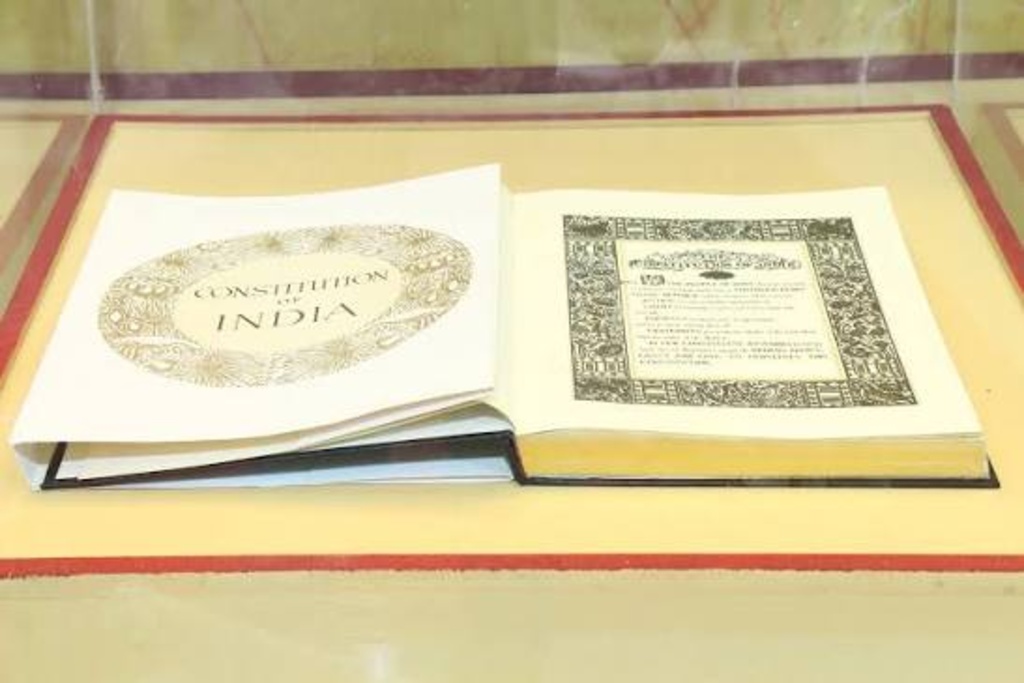
Unlike the US Constitution, the Constitution of India has been amended over 100 times in the last 76 years and several new proposals for amendment are currently before Parliament. Despite this intensive political practice of constitutional amendments, there is limited public discourse on amendments. Tripurdaman Singh’s and Arudra Burra’s work on the first amendment to the Constitution shows the value and need for more sustained analysis of constitutional amendments in India.
The constitutionofindia.net website which is the most accessible, comprehensive, authoritative and popular archive of Indian constitutional history is yet to chronicle the history of constitutional amendments. No other digital archive of these amendments and the preceding parliamentary debates is available today. Today we begin to remedy these gaps with a brief historical and analytical overview of constitutional amendments in India.
Constitutional Amendment in India
The Indian Constitution can be amended in three ways depending on the subject matter of the amendment. While some amendments (for instance, to state boundaries and legislative councils in States) can be enacted through support of a simple majority in both houses of Parliament and the President’s assent, others require the support of a two-thirds majority of both houses of Parliament. Yet others require ratification by one-half of the legislative assemblies of the States.
As most constitutional amendments require a two-thirds majority, it is useful to explore how the political composition of the Lok Sabha shapes Indian amendment history. The graph below explores the extent to which constitutional amendments are correlated to the composition of the Lok Sabha. All constitutional amendments passed in each Lok Sabha since 1952 are on the y-axis with time on the x-axis. Regimes with a two-thirds majority, held by either a single party or a coalition, are shaded in red, while those without any party or coalition holding such a majority are shaded in blue. The number of constitutional amendments passed in each year can be viewed by hovering over the dot corresponding to the year.
This graph yields several insights. At the outset, political majorities matter. Periods where a single party/coalition has held a two-third majority in the Lok Sabha have seen a higher number of constitutional amendments notified compared to periods where such a majority did not exist. Illustratively, the 5th Lok Sabha (January 15, 1985 – November 27, 1989) passed 19 amendments while the Indian National Congress (INC) held 352 seats out of 521. This is the highest number of constitutional amendments that any Lok Sabha has passed till date. A similarly high number of amendments is seen in the 8th Lok Sabha (January 15, 1985 – November 27, 1989), which passed as many as 14 amendments with the INC holding 415 seats out of 542, and the 3rd Lok Sabha (April 2, 1962, to March 3, 1967), which passed 8 amendments with the INC holding 361 out of 494 seats. The 1st and 2nd Lok Sabha, which also had a two-thirds majority held by the INC, passed a fairly high number of 6 and 5 amendments respectively.
On the other hand, far fewer amendments have been notified where no single party/coalition had a two-thirds majority. For instance, the 4th (March 4, 1967, to December 27, 1970) passed only 3 amendments, the 6th (March 23, 1977 – August 22, 1979) passed 2, and the 7th (January 21, 1980 – December 31, 1984) passed 3.
However, the absence of a two-thirds majority for the ruling party and its coalition partners did not deter the 13th Lok Sabha (October 20, 1999 – February 6, 2004) from notifying 14 constitutional amendments, as many as during the 8th Lok Sabha where the ruling party did have such a majority. The 9th (December 2, 1989 – March 13, 1991) and 10th Lok Sabha (June 20, 1991 – May 10, 1996) were also productive in terms of constitutional amendment despite a similar lack of two-thirds majority, with the government notifying 7 and 10 amendments respectively.
Therefore, while political majorities matter, they are not decisive – and are certainly not a prerequisite – in determining the number of constitutional amendments a government notifies.
These preliminary findings require qualification. First, we are counting the number of constitutional amendment acts notified, but do not account for the number of articles amended or the significance of the changes made through these Acts. Secondly, the legislative process in India requires approval from a two-third majority of both Houses of Parliament and assent from the President. The current analysis focuses on the political composition of the Lok Sabha. The political composition of the Rajya Sabha and the role of the President may better explain some of the findings above. Thirdly, the constitutional amendment process requires a two-third majority of the members present and voting in the two houses, not the total strength of the house. This analysis is based on two-thirds majority of the total strength of the house, and we have not assessed the actual voting patterns in each case. Finally, we have not analysed the constitutional amendment proposals introduced in Parliament but not passed, enacted or notified, which is necessary for us to assess the wider conditions that shape a successful amendment proposal.
We hope to study these and other questions in relation to constitutional amendments as we move forward. We invite your queries and recommendations on the upcoming constitutional amendments section on constitutionofindia.net.
[Assisted by Niharika Mukherjee.]
More blog posts
‘Can a leader run the country from jail?’
24 July 2026 • By Niharika Mukherjee
Constitutional imagination on the role of ministers suggests that the need for governmental stability must temper debate on the Constitution (130th Amendment) Bill, 2025.

‘Democracy is an expensive affair’: ONOE and the Constituent Assembly
16 July 2026 • By Niharika Mukherjee
TT Krishamachari's words on the floor of the Constituent Assembly of India on 31 May 1949 are noteworthy for the present debate on simultaneous elections.