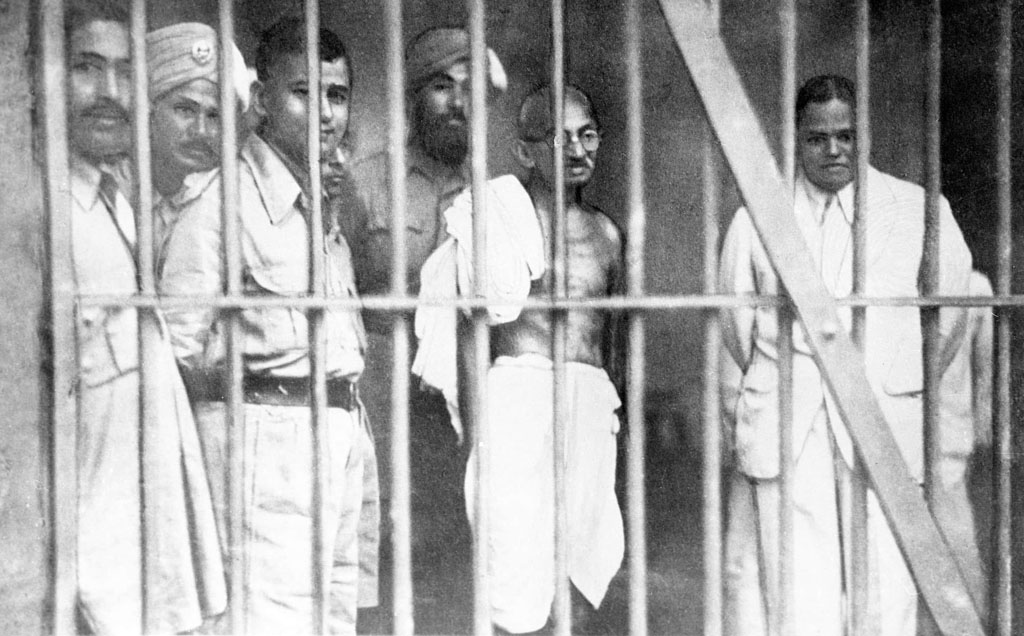
An inmate at the Tihar Jail was allowed to meet his lawyers twice a week. When he pleaded before a court in early 2024 to have this limit raised to five meetings a week, the counsel for the Enforcement Directorate argued that the inmate should not expect different treatment just because he was then a sitting Chief Minister and wanted to run his government from jail.
The Constitution (130th Amendment) Bill, 2025 was introduced in Parliament in August 2025 before being referred to the Joint Parliamentary Committee presently considering it. It proposes to amend Articles 75 and 164 of the Constitution, to add new grounds for removal of ministers in State Governments and the Union Government. Such removal will be ‘automatic’ if a minister is arrested and detained in custody for thirty consecutive days for an offense punishable with imprisonment up to five years. It also proposes a similar amendment to Article 239AA, the corresponding provision for the National Capital Territory of Delhi.
Conviction to Detention: Lowering the Threshold
The Bill marks a clear change from the existing Constitutional position. Under Article 75(5) and 164(4), ministers in Parliament and State Legislatures cease to hold office if they are not members of the relevant legislature for six consecutive months. Hence, while there are no qualification or disqualification criteria specific to ministers in the Constitution, all such criteria applicable to members of legislatures also apply to them. The Supreme Court affirmed this even where a person holds the office of a minister for less than six consecutive months in BR Kapur v State of Tamil Nadu, a 2001 case concerning the validity of the appointment of an individual as a Chief Minister while her appeal against conviction was pending before a court.
Articles 84 and 173 of the Constitution provide the qualification criteria for a person to be a member of Parliament or State Legislatures, and Articles 102 and 191 lay out the disqualification criteria for the same. The Representation of the People Act, 1951, further, provides that persons convicted or found guilty of certain offences including corrupt practices are disqualified from being members of legislatures for a limited number of years.
Unlike the Bill, none of these provisions envisage removal of ministers – or any member of a legislature – due to arrest and detention alone, as distinct from conviction. Support for the Bill has invoked the need to uphold morality and public trust in the highest executive office-holders in the government, and ensure that the ‘character and conduct of Ministers’ holding office is ‘beyond any ray of suspicion’. Speaking on the rationale behind it, a prominent minister in the Union Government stated to a news agency that ‘when the Constitution was made, the Constitution makers would not have imagined that any Chief Minister would go to jail and still remain the Chief Minister’.
The Constituent Assembly Debates do not definitively answer whether such an eventuality was in fact envisaged by its members. However, reflection on two related points indicates a distinct constitutional imagination that emphasized stability of the government and trust in elected representatives over the imperative to avoid it.
A Stable Government Needs Ministers to be Secure in their Seats
For one, when the Assembly discussed draft Article 62 (now Article 75), an amendment was proposed by Kazi Syed Karimuddin, a member of the All-India Muslim League elected from the Central Provinces and Berar, to enumerate – and limit – the grounds for ministers’ removal. This amendment was not passed, but its justification by the member reflected the concern that ministers, without security of their position, would not be able to form a stable government. To quote, Karimuddin stated:
“Until the Ministers feel secure in their seats, it is possible that there will be interference in the day-to-day administration of the country. Therefore my submission is that, in order to have a stable and a formidable government, which would not be influenced by the people in the street or by their supporters, it is very necessary that it should not be removable by the House.”
Trust in Elected Representatives
For another, the framers held divergent views on whether even conviction for an offense should be a constitutionally enshrined basis for disqualification of members from legislatures. While the Government of India Act 1935 Act included it, the Drafting Committee removed it from the Draft Constitution prepared by BN Rau at the initial stages of the drafting process. It was attempted to be reinstated as a qualification criterion for appointment as a member of a legislature through an amendment proposed by KT Shah on 30 December 1948. To this, Dr Ambedkar said:
“His [KT Shah’s] last proposition is that no person who is convicted may be appointed a Minister of the State. Well, so far as his intention is concerned, it is no doubt very laudable and I do not think any Member of this House would like to differ from him on that proposition. But the whole question is this whether we should introduce all these qualifications and disqualifications in the Constitution itself. Is it not desirable, is it not sufficient that we should trust the Prime Minister, the Legislature and the public at large watching the actions of the Ministers and the actions of the legislature to see that no such infamous thing is done by either of them? I think this is a case which may eminently be left to the good-sense of the Prime Minister and to the good sense of the Legislature with the general public holding a watching brief upon them. I therefore say that these amendments are unnecessary.”
An Alternate Model for Ensuring Ministerial Integrity
Faith in the ‘good sense’ of the Prime Minister, legislature and public is not an outdated notion. It is visible, for instance, in the United Kingdom’s Ministerial Code (first published in 2010), which lays down detailed standards of conduct for ministers. This Code is expected to be upheld by Ministers of the country’s House of Commons on their own accord and responsibility for adherence to it is affixed on the Prime Minister.
On the issue of concern to India’s Constitution (130th Amendment) Bill, 2025, the Code notes that that ministers’ involvement in legal proceedings in a personal capacity may have implications for them in their official position. It requires ministers to consult the government’s Law Officers and Independent Adviser on Ministerial Standards ‘in good time and before pre-action or formal legal proceedings are initiated so that they may offer guidance on the potential implications and handling of the proceedings’. These advisors are expected to provide impartial advice to the Minister on the appropriate course of action under the Code.
Means and Ends
A clearly articulated and publicized standard of conduct of this nature strikes a balance among the Indian Constituent Assembly’s concern for governmental stability, a parliamentary democracy’s need to trust its elected leaders, and the present government’s stated objective of raising the moral standing of the political executive. The alternative policy choices available in this respect also prompt reflection on what the proposed means say about the ends sought.
[Research assistance was provided by Akull Kumar and Niyanthri Arun.]
More blog posts

‘Democracy is an expensive affair’: ONOE and the Constituent Assembly
16 July 2026 • By Niharika Mukherjee
TT Krishamachari's words on the floor of the Constituent Assembly of India on 31 May 1949 are noteworthy for the present debate on simultaneous elections.
Independence: A Tale of Two Declarations
04 July 2026 • By Editorial Team
What impact did the American Declaration of Independence have on the Declaration of Purna Swaraj introduced by the Indian National Congress in 1930?